
Showing posts with label Palagala. Show all posts
Showing posts with label Palagala. Show all posts
2/20/2012
Photo of the Week (02/20/2012): Blue ring angel fish


9/05/2011
Ghost Nets
When a person sits down to a fish curry or a portion of fish and chips, they rarely think of where that fish comes from. We rarely realize that when we consume fish, we are eating the last truly wild caught meat on the planet, our ancient role as hunters reprised in the role of modern day fishermen.
Of course the new age fishermen are a far cry from what they were centuries or even decades ago. With engines, mechanization, longlines that stretch for kilometers with thousands of hooks and nets that could engulf the Empire State Building, the fisheries industry has become almost unrecognizable as has sadly our oceans, rapidly depleted and overfished what we see in our seas now appears to be but a sad remnant of the abundance that was there decades ago.
Our surface interval chats with Uncle Sumathi used to really bring this home, 56 years old, he had seen foreign trawlers come and rape the seas off Colombo, taking so much fish that the numbers have never recovered. Apparently the local fishermen had to gang up and beat up some of the fishermen who came in the trawlers to get rid of them and protect what was left. The discussion about the differences from then and now were frequent and depressing.
We rarely think about the ‘cost’ of the food on our plate except in monetary terms. The reality is that there is a far greater hidden cost to our environment, apart from the incidental catch which kills thousands of marine mammals and birds a year our hunger for fish continues to kill days, weeks, months and even years after the fishermen have moved on. This is done silently, without fan-fare by lost nets, those that escaped the fishermen, taken away by currents or carelessness.

We see these nets often on our dives, especially on the inner reefs, carpeting the rock smothering everything in its path. Some are huge and while we try and take off what we can, it is a disheartening process as sea fans and soft corals often crunch away from the rock as we cut the nets. We often find fish entangled, dead or dying and other animals (await a story about a crab rescued from a net) waiting for a slow, inevitable death in the nets.

One of our wrecks, the Medhafaru was literally a tomb for fish being sheathed in nets before some inteprid divers from the Sri Lanka Sub Aqua Club cleared a lot of them from the ship. Research has provided some staggering estimates for kills from these nets, with a single net in Puget Sound being estimated to have killed over 3,000 seabirds and fish combined. We don’t have any figures from Sri Lanka but it would be safe to assume fish kills are quite high.

Divers can of course play a part in removing this menace but with the risk of entanglement it is advisable if only experienced divers working in teams tackle this kind of thing. We can all however try and understand where our seafood comes from and at least appreciate the cost to our natural systems from this harvest.

Of course the new age fishermen are a far cry from what they were centuries or even decades ago. With engines, mechanization, longlines that stretch for kilometers with thousands of hooks and nets that could engulf the Empire State Building, the fisheries industry has become almost unrecognizable as has sadly our oceans, rapidly depleted and overfished what we see in our seas now appears to be but a sad remnant of the abundance that was there decades ago.
Our surface interval chats with Uncle Sumathi used to really bring this home, 56 years old, he had seen foreign trawlers come and rape the seas off Colombo, taking so much fish that the numbers have never recovered. Apparently the local fishermen had to gang up and beat up some of the fishermen who came in the trawlers to get rid of them and protect what was left. The discussion about the differences from then and now were frequent and depressing.
We rarely think about the ‘cost’ of the food on our plate except in monetary terms. The reality is that there is a far greater hidden cost to our environment, apart from the incidental catch which kills thousands of marine mammals and birds a year our hunger for fish continues to kill days, weeks, months and even years after the fishermen have moved on. This is done silently, without fan-fare by lost nets, those that escaped the fishermen, taken away by currents or carelessness.

A fish eye view of a derelict net, a net smothering Palagala (shallow reef in Colombo)
We see these nets often on our dives, especially on the inner reefs, carpeting the rock smothering everything in its path. Some are huge and while we try and take off what we can, it is a disheartening process as sea fans and soft corals often crunch away from the rock as we cut the nets. We often find fish entangled, dead or dying and other animals (await a story about a crab rescued from a net) waiting for a slow, inevitable death in the nets.

Dead and beheaded, a fish killed by a ghost net
One of our wrecks, the Medhafaru was literally a tomb for fish being sheathed in nets before some inteprid divers from the Sri Lanka Sub Aqua Club cleared a lot of them from the ship. Research has provided some staggering estimates for kills from these nets, with a single net in Puget Sound being estimated to have killed over 3,000 seabirds and fish combined. We don’t have any figures from Sri Lanka but it would be safe to assume fish kills are quite high.

Perilously close, fish feed close to a net on the Medhafaru
Divers can of course play a part in removing this menace but with the risk of entanglement it is advisable if only experienced divers working in teams tackle this kind of thing. We can all however try and understand where our seafood comes from and at least appreciate the cost to our natural systems from this harvest.

Cutting a net off the reef (only experienced divers should do this)
4/19/2010
Dive Log: Taprobane East Wreck & Taprobane West (26/02/2010)
Dive #29 and #30 (and #31), diving off Mount Lavinia with Colombo Divers, Boatman Ravinda, Divemaster Jehan, Dive guide DJ and buddy Karin.
Taprobane East Wreck: Bottom time – 35 minutes; Depth – 31.6 meters
Imagine a canvas of pure white sand and aquamarine blue, a picture perfect tropical paradise beach with the endless bowl of the blue sky replaced by the ocean. Into this starkly beautiful landscape had sunk a small boat, initially probably sullying the pristine scene with its harsh man-made lines, oil and diesel leaking. Time has however smoothed this out and now it is heaven underwater, the rusted shell covered in green and pink soft corals and fish exploding out of every nook and cranny.

As we sank through the 30 meter plus visibility waters, the rusted wreck looked strangely abstract and as we got closer, amorphous. As we got closer to the bottom the reason for the shape-shifting became obvious as an immense shoal of glass fish obscured the wreck. Literally pushing through the glinting shoal we moved over the sunken ship settling down into the sand at the stern where the fish life was more languid but still diverse.

An Electric Ray swam slowly into view while Blue-Lined Snappers and Fusiliers shoaled. Swimming back onto the main body of the wreck and exploring the skeletal remains we came across a Scorpion fish hiding amongst the rust coloured remains of the deck while Sweetlips playing hide and seek with us.
Taprobane East Wreck: Bottom time – 35 minutes; Depth – 31.6 meters
Imagine a canvas of pure white sand and aquamarine blue, a picture perfect tropical paradise beach with the endless bowl of the blue sky replaced by the ocean. Into this starkly beautiful landscape had sunk a small boat, initially probably sullying the pristine scene with its harsh man-made lines, oil and diesel leaking. Time has however smoothed this out and now it is heaven underwater, the rusted shell covered in green and pink soft corals and fish exploding out of every nook and cranny.

Heaven's Gate (picture courtesy of Dharshana Jayawardena off Dive Sri Lanka)
As we sank through the 30 meter plus visibility waters, the rusted wreck looked strangely abstract and as we got closer, amorphous. As we got closer to the bottom the reason for the shape-shifting became obvious as an immense shoal of glass fish obscured the wreck. Literally pushing through the glinting shoal we moved over the sunken ship settling down into the sand at the stern where the fish life was more languid but still diverse.

Glass fish surrounding the wreck (picture courtesy of Dharshana Jayawardena off Dive Sri Lanka)
An Electric Ray swam slowly into view while Blue-Lined Snappers and Fusiliers shoaled. Swimming back onto the main body of the wreck and exploring the skeletal remains we came across a Scorpion fish hiding amongst the rust coloured remains of the deck while Sweetlips playing hide and seek with us.

This was one of those dives again where there was just too much happening initially to absorb it all. This is a site that needs to be dived again and again to get adjusted to the life kaleidoscoping all around it and get into the nuances of the biodiversity that is so abundant on this small oasis of life amongst the white sand underwater desert. I simply spent my last few minutes of non-decompression time swimming into the shoal of Glassfish by myself and making 360 degree turns in the shoal to enjoy the sunlight arching through the thousand tiny translucent fish, the light rays glittering and sharding through them as bliss overcame me, 30 meters down in heaven.

Jehan and I explore the wreck (picture courtesy of Dharshana Jayawardena off Dive Sri Lanka)
Taprobane West: Bottom time – 43 minutes; Depth – 21.5 meters
We could see the reef from the boat and backrolling into the warm waters we could hear the reef rustling below us. According to Ravindra, this strangely serene sound is distinctive to reefs and they often use it to locate them when the bottom cannot be seen.
Taprobane West is similar to Serendip Reef in that you get this sensation of swimming in a giant fish bowl with the endless visibility and the white sand that peppers the bottom. Apparently according to DJ the huge shoals of fish that were usually present were absent, however I kept myself quite entertained with the profuse macro life on the reef. Tiny yellow leaf-like fish hid amongst the rocks while Shrimp Gobies vigorously defended their subterranean lairs. Each coral head, representing half a century to a century worth of growth was an ecosystem to itself. Apparently it was naptime at the reef because all the Red-Toothed Triggerfish were ensconsed within sandy holes with only their blue-fin tips visible, looking ludicrously like bright-blue parrots hiding with only their crossed wingtips shown.
The highlight of the dive for me however was when J and I found a huge Mantis Shrimp sheltering in a perfectly circular hole in the ground. Inching closer we were astonished to see tiny, translucent red and white banded offspring drifting up out of the hole. Unfortunately as my decompression time was ticking close to double digits we had to take leave of this watery birth scene and take regretful leave of paradise, clambering back onto the hot and sunny boat back to reality.
P.S.
Palagala: Bottom time – 34 minutes; Depth – 13.5 meters
Dive #31, mostly due to Jehan mentioning idly that another diver was coming for an afternoon dive and asking if I wanted to tag along and my inability to say no to diving. This was largely a quiet dive on Palagala, murky visibility limited to about 3-4 meters and a new diver who had issues with his buoyancy. Most of our time was spent miming breathing in and out full underwater to try and get him to sort himself out in between him excitedly pointing at the fish swirling around us in the green. But then it was a dive…so I was happy.
4/14/2010
Dive Log: Palagala & Bambadahaya (Ten Fathoms) (27/01/2010)
Dive #15 and #16, diving off Mount Lavinia with Colombo Divers, Boatman Ravinda, Instructor Shaf and Divemaster Jehan.
Palagala: Bottom time – 46 minutes; Depth – 12.7 meters
This was actually my first dive with my own gear and only my third dive with Colombo Divers following my fiasco of a performance on the first two dives. I think Shaf was still a bit circumspect about my diving abilities but we headed off for the short boat ride to Palagala and hit the bottom. Truth be told I’m quite far behind on my dive logs these days and I can’t really remember much about this dive. What I do remember was that I was somewhat of a better performer during this dive though I faintly recall being pulled down by Shaf during the safety stop once.
A juvenile Golden Trevalley also made an entertaining interlude for us, swimming up off the reef and getting quite pally with us. Apparently they are quite fond of swimming up to large fish and following them for protection. Of course every now and then they miscalculate and end up getting eaten (or so the caption says for the below picture from the Discovery Channel website. Our little fellow though just swam with us for awhile, peering in our masks until he decided we were not impressive enough to provide him protection and absconded into the green waters, his yellow and black stripes fading quickly in the distance.

Shaf was really enthusiastic about Nudibranches as well and pointed out a large Phyllidia ocellata in an overhang but that’s about where my memory of this early dive fails.
Bambadahaya (Ten Fathoms): Bottom time – 34 minutes; Depth – 19.2 meters
This dive was quite similar to Palagala apart from being a bit deeper, the rocky shelves of a typical Sri Lankan reef with slightly murky conditions, 5-8 meters of visibility. Again my memory is kind of shoddy on this dive but apart from some Blue-Lined Snappers and Bannerfish the main attraction were the Nudibranchs that Shaf with his eagle eye spied for us to look at. Phyllidia ocellata, Phyllidiopsis phiphiensis and Chromodoris geminus were all in attendance and please do click through to the pictures to take a look at the superlative colours from Nudipixels.net.
I’m not entirely sure why my memory is so shoddy from these first couple of dives but I’m going to put it down to spending most of my time concentrating on surviving underwater with little time to take in the sights and sounds. I guess the fact that I’m here writing this means I did a fairly reasonable job.
What can I say except.
Live to Dive!
Palagala: Bottom time – 46 minutes; Depth – 12.7 meters
This was actually my first dive with my own gear and only my third dive with Colombo Divers following my fiasco of a performance on the first two dives. I think Shaf was still a bit circumspect about my diving abilities but we headed off for the short boat ride to Palagala and hit the bottom. Truth be told I’m quite far behind on my dive logs these days and I can’t really remember much about this dive. What I do remember was that I was somewhat of a better performer during this dive though I faintly recall being pulled down by Shaf during the safety stop once.
A juvenile Golden Trevalley also made an entertaining interlude for us, swimming up off the reef and getting quite pally with us. Apparently they are quite fond of swimming up to large fish and following them for protection. Of course every now and then they miscalculate and end up getting eaten (or so the caption says for the below picture from the Discovery Channel website. Our little fellow though just swam with us for awhile, peering in our masks until he decided we were not impressive enough to provide him protection and absconded into the green waters, his yellow and black stripes fading quickly in the distance.

Shaf was really enthusiastic about Nudibranches as well and pointed out a large Phyllidia ocellata in an overhang but that’s about where my memory of this early dive fails.
Bambadahaya (Ten Fathoms): Bottom time – 34 minutes; Depth – 19.2 meters
This dive was quite similar to Palagala apart from being a bit deeper, the rocky shelves of a typical Sri Lankan reef with slightly murky conditions, 5-8 meters of visibility. Again my memory is kind of shoddy on this dive but apart from some Blue-Lined Snappers and Bannerfish the main attraction were the Nudibranchs that Shaf with his eagle eye spied for us to look at. Phyllidia ocellata, Phyllidiopsis phiphiensis and Chromodoris geminus were all in attendance and please do click through to the pictures to take a look at the superlative colours from Nudipixels.net.
I’m not entirely sure why my memory is so shoddy from these first couple of dives but I’m going to put it down to spending most of my time concentrating on surviving underwater with little time to take in the sights and sounds. I guess the fact that I’m here writing this means I did a fairly reasonable job.
What can I say except.
Live to Dive!
3/22/2010
Dive Log: Palagala (Formosa) and Barracuda (2012/2009)
Dive #23 and #24, diving off Mount Lavinia with my favourite Dive Shop Colombo Divers, Boatman Ravinda, Dive buddy S and Divemaster Jehan.
Palagala: Bottom time – 47 minutes; Depth – 13 meters
This was the dive with the rather unexpected workout. S hadn’t dived for a bit and as we sank to the bottom I figured there might be some issues. The 3m visibility in Palagala takes a bit of getting used to if most of the dives you had done were the blue, 10m+ visibility ones in Matara or Hikkaduwa. And Palagala had freaked me out the first time. As S hit the bottom I winced a bit as both her hands came in contact with the silt and rock at the bottom. Not because of any damage to the corals, since it was mostly rock, but out of concern for her. Scorpion fish are abundant on the reef, amazingly camouflaged and getting stung by one is no picnic. You really want to take a good look before landing on any stony surfaces here (and in the ocean in general).
We settled down for a bit and tried to sort out S’s buoyancy, almost a year out of diving can play hell with these skills and I felt for her as she struggled a bit to sort herself out. Unfortunately she was a bit overweighted and just couldn’t get a hang of either how much air to put into her BC or to get her breathing sorted to maintain her buoyancy. As we swam around I kept a close eye on her and lifted her over the reef when she seemed about to run into it and kept another close eye to make sure she didn’t shoot to the surface. I must say I never thought I would get a bicep workout underwater but there you go...there's always a first!
All in all quite an interesting dive if not for the usual reasons. Trying to help someone sort themselves underwater was a fascinating experience and probably the first time I got an inkling that I might want to pursue a Divemaster course.
Barracuda Reef: Bottom time – 32 minutes; Depth – 23.4 meters
S suffered from a bout of sea sickness during the surface interval and decided not to do the second dive, so J and I sank into the blue waters of Barracuda Reef, where the usual shoal of Pickhandle Barracuda didn’t fail to delight, shiny yellow and grey against the blue backdrop.
Barracuda Reef really is a superlative dive, the blue coral fans peppering the rocks and crevices with innumerable fish and invertebrate life just inviting a diver to stand on their head, exhale and explore. I had decided to reduce my weights by one kilo and thus I was in the throes of neutral buoyancy nirvana. The one kilo reduction meant I could fine tune my buoyancy without any issues and the sense of freedom as I swooped over the reef was exhilarating.
The dive itself was jaw dropping as usual. A lobster lurked under a rock and refused to come out and play while another shrimp hid in a hole in the rock, feelers sticking out, white and stringy. As we swam over an overhang in the rock I noticed what looked like a spotted plate on the sand, underneath the overhang. Exhaling and sinking down gracefully (even if I do say so myself) I was excited to discover an Electric Ray hiding from the daylight hours. Despite Jehan and I both cooing over him, he simply blinked his eyes, ruffled his body into the sand and studiously ignored us. I guess when you pack a voltage from 50-200V you can afford to be a bit nonchalant.
The grande finale to a perfect dive was what appeared to be a little grooming session between a Giant Moray and the most multi-coloured crab I had seen sans being devilled. The Moray gaped at us out of a cylindrical hole in the reef and as I stared at this in fascination, a little movement on the side of his neck attracted me. There was the crab, sylph and coloured in the shades of bright orange, deep red and a midnight black, skittling around the Moray’s neck. The Moray seemed quite chilled out about this with only the occasional shiver as the crab touched a soft spot (I guess). Leaving this rather uncommon tryst to their own devices, we regretfully noted that our decompression time had come to an end and surfaced to be dragged rather ungracefully (in my case not Jehan’s) back onto the boat by Ravinda.
Palagala: Bottom time – 47 minutes; Depth – 13 meters
This was the dive with the rather unexpected workout. S hadn’t dived for a bit and as we sank to the bottom I figured there might be some issues. The 3m visibility in Palagala takes a bit of getting used to if most of the dives you had done were the blue, 10m+ visibility ones in Matara or Hikkaduwa. And Palagala had freaked me out the first time. As S hit the bottom I winced a bit as both her hands came in contact with the silt and rock at the bottom. Not because of any damage to the corals, since it was mostly rock, but out of concern for her. Scorpion fish are abundant on the reef, amazingly camouflaged and getting stung by one is no picnic. You really want to take a good look before landing on any stony surfaces here (and in the ocean in general).
We settled down for a bit and tried to sort out S’s buoyancy, almost a year out of diving can play hell with these skills and I felt for her as she struggled a bit to sort herself out. Unfortunately she was a bit overweighted and just couldn’t get a hang of either how much air to put into her BC or to get her breathing sorted to maintain her buoyancy. As we swam around I kept a close eye on her and lifted her over the reef when she seemed about to run into it and kept another close eye to make sure she didn’t shoot to the surface. I must say I never thought I would get a bicep workout underwater but there you go...there's always a first!
All in all quite an interesting dive if not for the usual reasons. Trying to help someone sort themselves underwater was a fascinating experience and probably the first time I got an inkling that I might want to pursue a Divemaster course.
Barracuda Reef: Bottom time – 32 minutes; Depth – 23.4 meters
S suffered from a bout of sea sickness during the surface interval and decided not to do the second dive, so J and I sank into the blue waters of Barracuda Reef, where the usual shoal of Pickhandle Barracuda didn’t fail to delight, shiny yellow and grey against the blue backdrop.
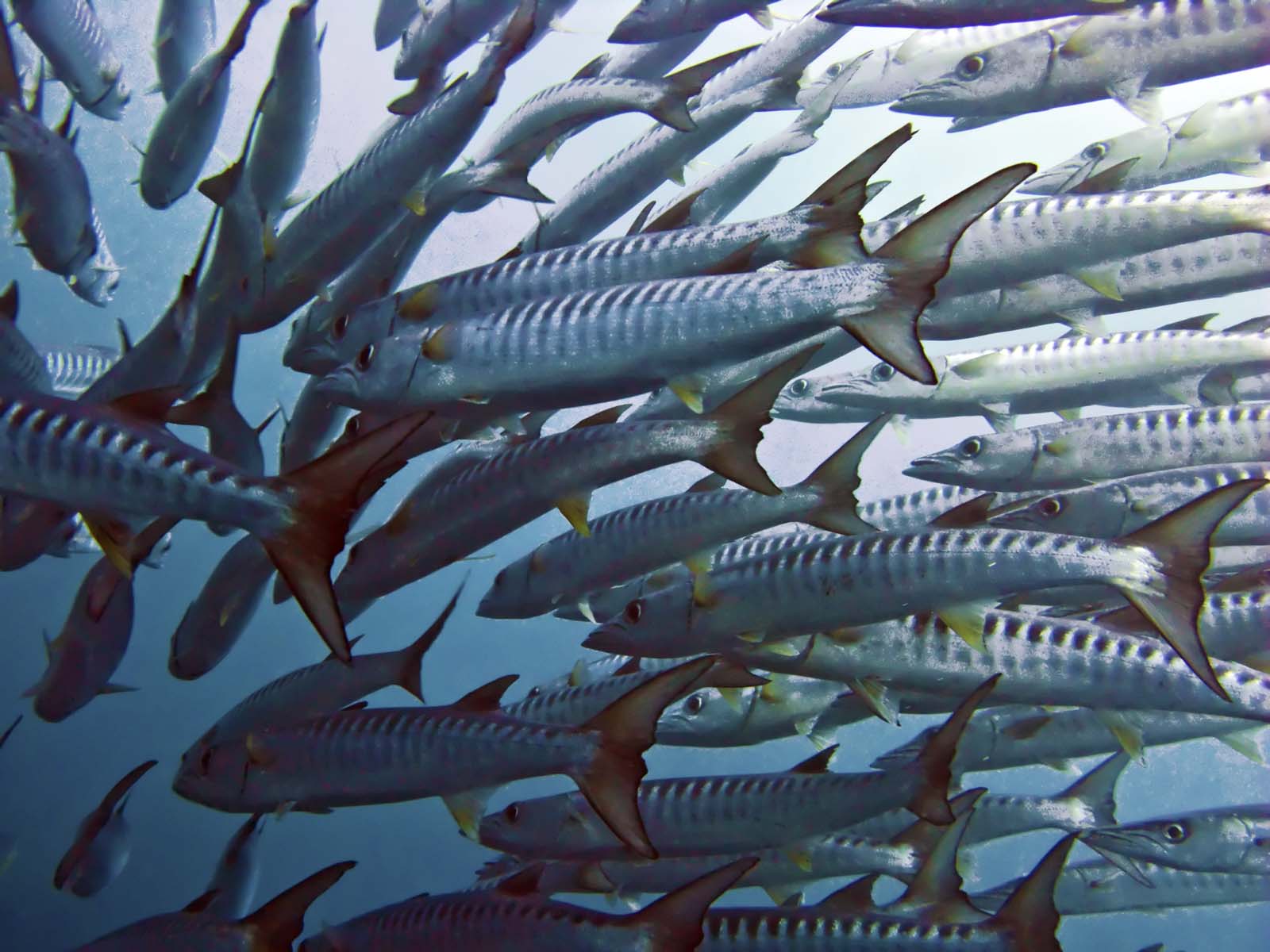
Barracuda Reef really is a superlative dive, the blue coral fans peppering the rocks and crevices with innumerable fish and invertebrate life just inviting a diver to stand on their head, exhale and explore. I had decided to reduce my weights by one kilo and thus I was in the throes of neutral buoyancy nirvana. The one kilo reduction meant I could fine tune my buoyancy without any issues and the sense of freedom as I swooped over the reef was exhilarating.
The dive itself was jaw dropping as usual. A lobster lurked under a rock and refused to come out and play while another shrimp hid in a hole in the rock, feelers sticking out, white and stringy. As we swam over an overhang in the rock I noticed what looked like a spotted plate on the sand, underneath the overhang. Exhaling and sinking down gracefully (even if I do say so myself) I was excited to discover an Electric Ray hiding from the daylight hours. Despite Jehan and I both cooing over him, he simply blinked his eyes, ruffled his body into the sand and studiously ignored us. I guess when you pack a voltage from 50-200V you can afford to be a bit nonchalant.

The grande finale to a perfect dive was what appeared to be a little grooming session between a Giant Moray and the most multi-coloured crab I had seen sans being devilled. The Moray gaped at us out of a cylindrical hole in the reef and as I stared at this in fascination, a little movement on the side of his neck attracted me. There was the crab, sylph and coloured in the shades of bright orange, deep red and a midnight black, skittling around the Moray’s neck. The Moray seemed quite chilled out about this with only the occasional shiver as the crab touched a soft spot (I guess). Leaving this rather uncommon tryst to their own devices, we regretfully noted that our decompression time had come to an end and surfaced to be dragged rather ungracefully (in my case not Jehan’s) back onto the boat by Ravinda.

2/24/2010
Dive Log: Cargo Wreck and Formosa Reef (11/02/2010)
Dive #21 and #22, diving off Colombo with Colombo Divers and divemaster (instructor in training) Jehan Dive Instructor/King Pin Paris and dive buddy Andy from Canada.
Cargo Wreck: Bottom time – 48 minutes; Depth – 26.8 meters
The sea looked like a giant silver-grey dish as I strolled into the dive center a bit behind schedule. Upul and Ravindra were as usual hard at work loading the boat and I kitted up and loaded my gear as well. The sky was overcast and fisher boats lurked in the light mist looking like ancient Arab dhows as our boat slipped out smoothly through the almost non-existent surf. The contrast between the ocean today and the last few times I’d been out was breathtaking, where the white caps and surges had predominated the last times, today, the boat moved as if it were drifting through silk, grey, smooth, silk peppered rather incongruously with terns perched on any bit of flotsam they can find. Flying fish skittered over the surface while here and there the surface boiled with shoals of fish.
It was only on the boat that I found out to my delight that we were going to be going to the Cargo Wreck, a huge ship that had been sunk around 5km off the coast of Dehiwala. Having seen the pictures to say that I was full of anticipation was the understatement of the century. As we hovered over the wreck we could see a giant shoal of fusiliers, orange against the dark blue of the sea. Rolling over and descending, I had to hold back from pinching myself as we sank through the shoal, slivers of fish glinting around us as the coral encrusted hull rose out of the depths. I'll admit though as the wreck loomed up from the depths, I felt a momentary shiver of fear. The holes in the deck were stark black and I felt that if I continued on my way down, I would be engulfed in the ship's depths, to be eaten by a gigantic octopus, or more likely for me, stung to death by a ridiculously small scorpionfish. I still struggle a bit with my buoyancy so I'll admit, I held onto the bright blue anchor rope quite hard as I pumped more air into my BC to stop my downwards descent.
Visibility was divine, at least 20 meters and the ship took my breath away. The terraces and turrets of the ship were swarming with fish life. Looking up and away from the ship, the shoals of fusiliers were breathtaking. Sailing over and through the wreck was breathtaking, the portholes eerily black. I was imagining huge moray eels or other sea monsters lurking in their depths. The reality around me however was even more fascinating than imagined monsters. Red toothed triggerfish, Blackbar triggerfish, White spotted boxfish and Snappers were in abundance.
Ropes still coiled and undulated in the water and swimming closer I excitedly noted a large trumpetfish, green and yellow stripes with an incongruous minutely whirring tail. Exhaling to take myself down, I hovered eye to eye with him as he gazed at me impassively before moving away. Rounding the hull was another school of deep blue trevalley like fish, unidentified by all on the dive but beautiful in their majesty as they traversed the sunken steel of the ship. The fish ID issue is getting to be a bit of a bugbear for me as is the lack of an underwater camera, but I’m still in the fledgling stages of my diving career so I guess both will come in time.
The batfish were an especial highlight as they hid in the girders, apparently a bit shy of us. Two large psychedelic (in Jehan’s words) Oriental Sweetlips were also on show, much larger and prettier than those we had seen on the shallower reefs. Our little yellow friend even showed up but this time kept more of a distance.
I could go on and on about the fish. Truth be told I was so overwhelmed I can’t even describe coherently what I saw to a great extent. It was all a blur of bubbles, fins, colour and deep blue. The most poignant moment for me was however swimming over a life-raft that had dislodged when the ship sank and could be seen ghosting the sand. That really brought home to me that we were now drifting over what men had built, where they had worked and lived. I think that almost morbid, surreal realization is why I’m now hooked onto wreck diving.
Formosa Reef: Bottom time – 63 minutes; Depth – 13 meters
After the excitement (and depth) of the Cargo, we moved onto the good old Formosa Reef for a shallow, extended dive. It may only have been 13 meters and lacked the charisma of the Cargo Wreck but life was in abundance. A Nudibranch that was the biggest I have ever seen, a full 5 inches in length, white, black and yellow, Bi-coloured Blennies flirting elusively through the rocks and a baby Scorpion fish. After seeing the latter and noting the brilliant camouflage, I made a note to myself to be extra careful where I place my hands since Scorpion fish pack a pretty nasty wallop.
The highlight were the two Octopi however, both within a meter of each other, apparently a happy couple? With the larger one within a deep gully and the other, smaller specimen hiding in a crevice. I would have missed the smaller one if it hadn’t suddenly blushed white when I swam over it. Which of course intrigued me because I had never seen a rock change colour for me, which led me to investigate and discover the octopus. Andy found the larger one which as we hovered around, treated us to a display of its colour changing abilities, going from a deep russet to a midnight black.
Leaving the kaleidoscopic octopi behind, we surfaced and started the process of getting back onto the boat. We hadn’t really asked for any icing on the cake but we got it as a mere 10 meters away, a pod of dolphins suddenly surfaced. Hurriedly putting my mask back on I peered through the water to see if I could see them but the poor visibility defeated me. We watched from the water’s level as the dolphins turned away and headed out to sea, their black spotted grey bodies sliding through the oil slick water, looking oddly animatronic as they moved towards the horizon. My mind boggles to think how this could get any better.
Cargo Wreck: Bottom time – 48 minutes; Depth – 26.8 meters
The sea looked like a giant silver-grey dish as I strolled into the dive center a bit behind schedule. Upul and Ravindra were as usual hard at work loading the boat and I kitted up and loaded my gear as well. The sky was overcast and fisher boats lurked in the light mist looking like ancient Arab dhows as our boat slipped out smoothly through the almost non-existent surf. The contrast between the ocean today and the last few times I’d been out was breathtaking, where the white caps and surges had predominated the last times, today, the boat moved as if it were drifting through silk, grey, smooth, silk peppered rather incongruously with terns perched on any bit of flotsam they can find. Flying fish skittered over the surface while here and there the surface boiled with shoals of fish.
It was only on the boat that I found out to my delight that we were going to be going to the Cargo Wreck, a huge ship that had been sunk around 5km off the coast of Dehiwala. Having seen the pictures to say that I was full of anticipation was the understatement of the century. As we hovered over the wreck we could see a giant shoal of fusiliers, orange against the dark blue of the sea. Rolling over and descending, I had to hold back from pinching myself as we sank through the shoal, slivers of fish glinting around us as the coral encrusted hull rose out of the depths. I'll admit though as the wreck loomed up from the depths, I felt a momentary shiver of fear. The holes in the deck were stark black and I felt that if I continued on my way down, I would be engulfed in the ship's depths, to be eaten by a gigantic octopus, or more likely for me, stung to death by a ridiculously small scorpionfish. I still struggle a bit with my buoyancy so I'll admit, I held onto the bright blue anchor rope quite hard as I pumped more air into my BC to stop my downwards descent.
Visibility was divine, at least 20 meters and the ship took my breath away. The terraces and turrets of the ship were swarming with fish life. Looking up and away from the ship, the shoals of fusiliers were breathtaking. Sailing over and through the wreck was breathtaking, the portholes eerily black. I was imagining huge moray eels or other sea monsters lurking in their depths. The reality around me however was even more fascinating than imagined monsters. Red toothed triggerfish, Blackbar triggerfish, White spotted boxfish and Snappers were in abundance.

Ropes still coiled and undulated in the water and swimming closer I excitedly noted a large trumpetfish, green and yellow stripes with an incongruous minutely whirring tail. Exhaling to take myself down, I hovered eye to eye with him as he gazed at me impassively before moving away. Rounding the hull was another school of deep blue trevalley like fish, unidentified by all on the dive but beautiful in their majesty as they traversed the sunken steel of the ship. The fish ID issue is getting to be a bit of a bugbear for me as is the lack of an underwater camera, but I’m still in the fledgling stages of my diving career so I guess both will come in time.

The batfish were an especial highlight as they hid in the girders, apparently a bit shy of us. Two large psychedelic (in Jehan’s words) Oriental Sweetlips were also on show, much larger and prettier than those we had seen on the shallower reefs. Our little yellow friend even showed up but this time kept more of a distance.

I could go on and on about the fish. Truth be told I was so overwhelmed I can’t even describe coherently what I saw to a great extent. It was all a blur of bubbles, fins, colour and deep blue. The most poignant moment for me was however swimming over a life-raft that had dislodged when the ship sank and could be seen ghosting the sand. That really brought home to me that we were now drifting over what men had built, where they had worked and lived. I think that almost morbid, surreal realization is why I’m now hooked onto wreck diving.
Formosa Reef: Bottom time – 63 minutes; Depth – 13 meters
After the excitement (and depth) of the Cargo, we moved onto the good old Formosa Reef for a shallow, extended dive. It may only have been 13 meters and lacked the charisma of the Cargo Wreck but life was in abundance. A Nudibranch that was the biggest I have ever seen, a full 5 inches in length, white, black and yellow, Bi-coloured Blennies flirting elusively through the rocks and a baby Scorpion fish. After seeing the latter and noting the brilliant camouflage, I made a note to myself to be extra careful where I place my hands since Scorpion fish pack a pretty nasty wallop.


The highlight were the two Octopi however, both within a meter of each other, apparently a happy couple? With the larger one within a deep gully and the other, smaller specimen hiding in a crevice. I would have missed the smaller one if it hadn’t suddenly blushed white when I swam over it. Which of course intrigued me because I had never seen a rock change colour for me, which led me to investigate and discover the octopus. Andy found the larger one which as we hovered around, treated us to a display of its colour changing abilities, going from a deep russet to a midnight black.
Leaving the kaleidoscopic octopi behind, we surfaced and started the process of getting back onto the boat. We hadn’t really asked for any icing on the cake but we got it as a mere 10 meters away, a pod of dolphins suddenly surfaced. Hurriedly putting my mask back on I peered through the water to see if I could see them but the poor visibility defeated me. We watched from the water’s level as the dolphins turned away and headed out to sea, their black spotted grey bodies sliding through the oil slick water, looking oddly animatronic as they moved towards the horizon. My mind boggles to think how this could get any better.
2/17/2010
Dive Log: Barracuda Reef and Formosa Reef (07/02/2010)
Dive #19 and #20, diving off Colombo with Colombo Divers and divemaster (instructor in training) Jehan.
Barracuda Reef: Bottom time – 42 minutes; Depth – 23 meters
Sinking to the bottom off the reef, I was torn between being annoyed at myself for scraping my knees on the reef as I amateurishly tried to maintain buoyancy and be amazed at the shoal of barracuda in the near distance. As the yellow barracuda faded into the blue I righted myself, put a bit of air into my BCD and regained some dignity.
Barracuda Reef of course lived up again to expectations with Fusiliers swirling, a couple of baby Sri Lankan Hogfish and Timor wrasse putting in appearances. The latter fish is exceptionally beautiful, bluey greeny in colour with bright orange markings all over it. It was also only around 10cm in length and was thus easily overlooked. Having finally gotten some measure of neutral buoyancy I was thrilled to view the Timor Wrasse close up as I hovered above the reef.

As we moved along the reef, more and more fish turned up and swirled past More shoals of glassfish insisted that we swim through their iridescent forms. A Scorpionfish nestled in a gully as I swam respectfully past, giving it a wide berth. Jehan excitedly pointed at a tiny fish that I could only describe as a minute, multicoloured, iridescent leaf. Another time we hovered over another fissure in the rock as tiny golden shrimp sheltered within, jetting out every now and then to entertain themselves.
As we turned around and swam back to the anchor line we were hit by a strong current. In the deep blue as we moved forwards fighting the current, a small, yellow and black striped fish peeled off the reef and decided to adopt us. It was extremely endearing, circling around us, peering into our masks and acting almost like a tiny aquatic inquisitive puppy. The more I dive, the more I come to think fish do really have personalities (alternatively the pressure might be getting to me). Finally giving up the fight against the current we took leave of our little yellow friend and surfaced to be picked up by the boat.
Formosa Reef: Bottom time – 62 minutes; Depth – 12.7 meters
Yes this dive was long, very long! Formosa reef has plenty of attractions despite its rather shallow depth with a Giant Moray curled up in one of the holes in the rock, gaping rather timidly at us. There were also a number of Lionfish that had apparently decided to take an afternoon nap, one hanging on the side of a rock, looking slightly macabre, like a dark red, aquatic deadly bat. It was in such a deep sleep that even our bubble blowing interest in it didn’t disturb it and we drifted off leaving him in peace.


Two huge Blue Ringed Angelfish kept us company, hovering the reef in search of food. We passed a pair of adult Oriental Sweetlips, yellow and black in their finery and hovered over some beautiful nudibranches. The highlight was a pair of nudibranches, white and delicate purple in colour, which appeared to either be getting it on or following one another very closely. The one behind had its mouth (?) firmly latched onto the tail of the one in front as they proceeded along the reef, all of about 5cm of delicate beauty.
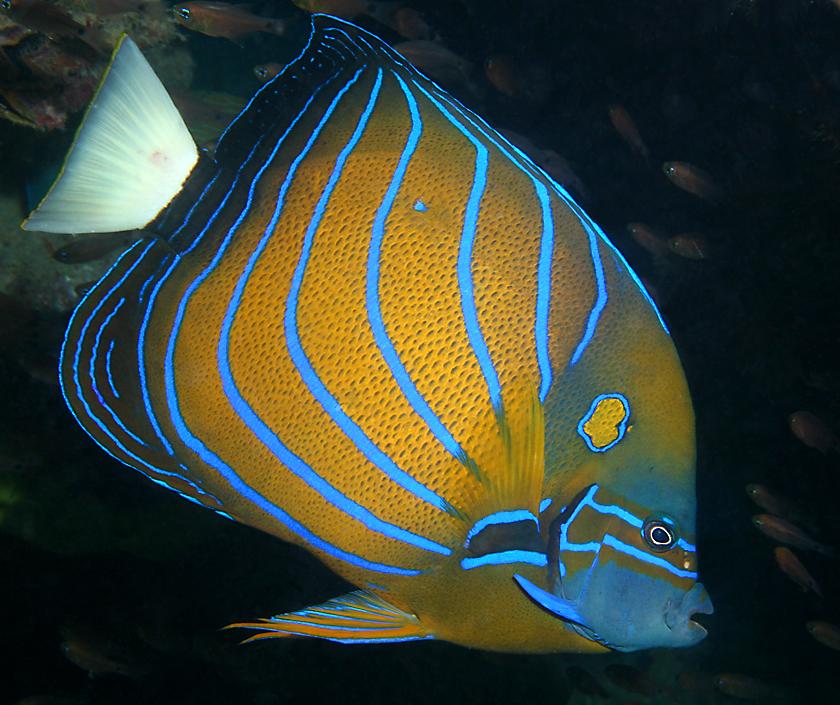

After we hit half a tank we swam back to the anchor line, the visibility reducing significantly as the current streamed brown and green particles behind us. The last bit was pretty tiring for me, having spent almost one and a half hours under water and I was for once, quite glad to hang in the water for our five minute safety stop, drifting through another cloud of small jellyfish, before finally clambering back onto the boat. Exhausted but content.
2/05/2010
Diving in the Suburbs
Diving has arrived in Colombo! Sort of…
I’m a newbie to the sport of recreational diving but after my initiation to it in the hinterlands of Matara (await a more detailed report on that trip) I have been ridiculously enthusiastic about it. Having a grand total of 12 dives under my belt in Matara, Unawatune, Bentota, Malibu and the Catalina Islands I was beyond excited to hear about diving in Colombo via the somewhat geographically misnomered Colombo Divers, who it turns out are actually located in Mount Lavinia or Galkissa as it is known in Sinhalese. Incidentally the former name never fails to make me smile when I think about (I suggest you do the same if you have no idea what I’m talking about).
Full of anticipation, I called Nishan to book a two tank dive, pointing out that I was inexperienced so would not likely be able to dive the 30m sites without serious injury. Hooking a tuk tuk over to Mount on Thai Pongal, I stepped onto a surprisingly crowded beach at 8am. I guess the concept of sleeping in on a holiday hadn’t occurred to the hordes on the beach. Strolling past Golden Mile and about 5 minutes walk down the beach was the innocuous dive center. I would have completely missed it if I hadn’t noticed two gentlemen wrestling animatedly with a BCD (i.e. a Buoyancy Control Device, the harness that holds your Scuba tank on your back) presumably with some kind of repair goal in mind.
Walking in I was introduced to the Colombo Divers contingent, Shafi, Maldivian but lived in Sri Lanka extensively (speaks better Sinhala than I do), Paris (apologies for any misspelling) from Greece and Jehan from Sri Lanka. The former two being instructors while the latter was an instructor in training.
Business appeared to be good, with a bunch of students who turned up to complete their courses and my dive buddy for the day turned up as well, a wonderful lady who also worked in the development field. Shafi was our divemaster and the two sites chosen were relatively simple sites, rock and Barracuda reef ranging from 11m to 21m. Loading the (small) boat we headed out from Mount Beach towards.
Rolling into the water, I found that I had made a significant error in the choice of my BCD, which was far too large. The low visibility, apparently due to Thai Pongal, and the strong current made the dive quite an uncomfortable one. The first dive was a relatively shallow one of about 12 meters called Palagala. The dive itself, apart from the less than optimal conditions was quite fascinating. There was more fish life to be seen that most of my previous dives in the south, Moorish Idols, bright green moon wrasses and Angelfish were in abundance. The rocky reef itself was quite impressive, giant rock shelves that looked almost like hewn steps, muddy brown in the green of the water. It was like swimming in a part of Atlantis.
45 minutes of dive time amongst the fish and we decided to come up as I was at 50 bar (i.e. what is generally known as a low tank). Shafi unwrapped a buoy and sent it shooting to the surface. The safety stop at 5m was a bit uncomfortable as hanging in the water there appeared to be a multitude of tiny jellyfish which stung enough to make things marginally uncomfortable.
Getting onto the boat it turned out that my dive buddy had a malfunction with her BCD and it was decided to head back and get a couple of new BCDs for the two of us. A quick trip to shore and it was back out to sea to Barracuda Reef, a site with a maximum depth of 22 meters. The current was however even worse here and visibility as bad. This was where I made a snafu which I am quite ashamed off. I didn't vent my BCD properly so was too buoyant the whole dive, annoying Shafi a fair amount. I'm not sure why I blanked on something so essential but the tricky conditions must have spooked me.
To be fair I cannot recollect much of this dive apart from some interesting nudi branches (tiny multi coloured invertebrates) and many more of the fish we had seen at the previous site. The resident barracuda were absent an unfortunately the current prevented much exploring and I came up to 50 bar pretty quickly in about 20 minutes. As Shafi went through the motions of unwrapping the buoy, I made my second much worse snafu, inadvertently pressing my inflate button on the BCD. As I shot to the surface, dismally watching the bubbles of my dive buddies receding I cursed at myself while continuously exhaling to ensure I didn't blow a lung out.
As the dark blue receded and my surroundings lightened I nervously started assessing myself for the bends, trying to separate the multitude of feelings in order to identify any sudden unexplained pains. As I bobbed worriedly on the surface I noted that I was very much by myself, the current having pushed us some distance from the boat. I couldn't even see the bubbles from my divebuddies anymore and had no idea how far I had drifted from them. The ocean and the sky merged into one giant cylinder, punctuated by the distant giant liners. The wait seemed interminable before the boatman saw my waving arms and swung by to pick me up. Thankfully Shafi didn't chew me out too much and the solution he provided, which I fully intended to follow up on was to dive more.
On the whole it was a great experience for Colombo (Mount?) diving and I will definitely be a frequent customer. Blue yonder here I come!
I’m a newbie to the sport of recreational diving but after my initiation to it in the hinterlands of Matara (await a more detailed report on that trip) I have been ridiculously enthusiastic about it. Having a grand total of 12 dives under my belt in Matara, Unawatune, Bentota, Malibu and the Catalina Islands I was beyond excited to hear about diving in Colombo via the somewhat geographically misnomered Colombo Divers, who it turns out are actually located in Mount Lavinia or Galkissa as it is known in Sinhalese. Incidentally the former name never fails to make me smile when I think about (I suggest you do the same if you have no idea what I’m talking about).
Full of anticipation, I called Nishan to book a two tank dive, pointing out that I was inexperienced so would not likely be able to dive the 30m sites without serious injury. Hooking a tuk tuk over to Mount on Thai Pongal, I stepped onto a surprisingly crowded beach at 8am. I guess the concept of sleeping in on a holiday hadn’t occurred to the hordes on the beach. Strolling past Golden Mile and about 5 minutes walk down the beach was the innocuous dive center. I would have completely missed it if I hadn’t noticed two gentlemen wrestling animatedly with a BCD (i.e. a Buoyancy Control Device, the harness that holds your Scuba tank on your back) presumably with some kind of repair goal in mind.
Walking in I was introduced to the Colombo Divers contingent, Shafi, Maldivian but lived in Sri Lanka extensively (speaks better Sinhala than I do), Paris (apologies for any misspelling) from Greece and Jehan from Sri Lanka. The former two being instructors while the latter was an instructor in training.
Business appeared to be good, with a bunch of students who turned up to complete their courses and my dive buddy for the day turned up as well, a wonderful lady who also worked in the development field. Shafi was our divemaster and the two sites chosen were relatively simple sites, rock and Barracuda reef ranging from 11m to 21m. Loading the (small) boat we headed out from Mount Beach towards.
Rolling into the water, I found that I had made a significant error in the choice of my BCD, which was far too large. The low visibility, apparently due to Thai Pongal, and the strong current made the dive quite an uncomfortable one. The first dive was a relatively shallow one of about 12 meters called Palagala. The dive itself, apart from the less than optimal conditions was quite fascinating. There was more fish life to be seen that most of my previous dives in the south, Moorish Idols, bright green moon wrasses and Angelfish were in abundance. The rocky reef itself was quite impressive, giant rock shelves that looked almost like hewn steps, muddy brown in the green of the water. It was like swimming in a part of Atlantis.
45 minutes of dive time amongst the fish and we decided to come up as I was at 50 bar (i.e. what is generally known as a low tank). Shafi unwrapped a buoy and sent it shooting to the surface. The safety stop at 5m was a bit uncomfortable as hanging in the water there appeared to be a multitude of tiny jellyfish which stung enough to make things marginally uncomfortable.
Getting onto the boat it turned out that my dive buddy had a malfunction with her BCD and it was decided to head back and get a couple of new BCDs for the two of us. A quick trip to shore and it was back out to sea to Barracuda Reef, a site with a maximum depth of 22 meters. The current was however even worse here and visibility as bad. This was where I made a snafu which I am quite ashamed off. I didn't vent my BCD properly so was too buoyant the whole dive, annoying Shafi a fair amount. I'm not sure why I blanked on something so essential but the tricky conditions must have spooked me.
To be fair I cannot recollect much of this dive apart from some interesting nudi branches (tiny multi coloured invertebrates) and many more of the fish we had seen at the previous site. The resident barracuda were absent an unfortunately the current prevented much exploring and I came up to 50 bar pretty quickly in about 20 minutes. As Shafi went through the motions of unwrapping the buoy, I made my second much worse snafu, inadvertently pressing my inflate button on the BCD. As I shot to the surface, dismally watching the bubbles of my dive buddies receding I cursed at myself while continuously exhaling to ensure I didn't blow a lung out.
As the dark blue receded and my surroundings lightened I nervously started assessing myself for the bends, trying to separate the multitude of feelings in order to identify any sudden unexplained pains. As I bobbed worriedly on the surface I noted that I was very much by myself, the current having pushed us some distance from the boat. I couldn't even see the bubbles from my divebuddies anymore and had no idea how far I had drifted from them. The ocean and the sky merged into one giant cylinder, punctuated by the distant giant liners. The wait seemed interminable before the boatman saw my waving arms and swung by to pick me up. Thankfully Shafi didn't chew me out too much and the solution he provided, which I fully intended to follow up on was to dive more.
On the whole it was a great experience for Colombo (Mount?) diving and I will definitely be a frequent customer. Blue yonder here I come!
Subscribe to:
Posts (Atom)