Showing posts with label Moneragala Chronicles. Show all posts

6/21/2010

Stepping on Snakes (Moneragala Chronicles)

As a word of explanation, I once spent two months living in a little village in Maragalakanda, close to Moneragala back in 2004. My purpose, living there without electricity or running water, was to study bird diversity in an agroforestry scheme for my MSc. This was when the photography bug first bit so there are some tales worth telling and some photos worth showing, though the latter were for the most part taken with a dinky Canon G3. For more of the Moneragala Chronicles click here.

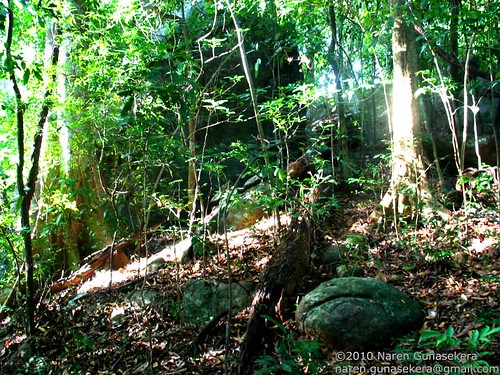
Nuwan jumped off the tree that he had just tied a yellow ribbon to, marking one of our research sites and landed lightly on the rock. He looked at his feet, looked at me initially with no indication that anything was amiss but a split second later his countenance changed. Dare I say he went a bit pale and in rapid succession he did a double take towards his feet and daintily but adroitly stepped aside.

Of course not being one to be fazed by anything, especially anything reptilian in nature, Nuwan excitedly beckoned me over to show me what he had almost landed on. On the rock, amidst the leaf litter lay a perfectly camouflaged, snake. Nuwan’s foot had landed a mere two inches away from its head but it hadn’t moved an inch as it lay there, the pointed snout of its viper head resting on its coils.
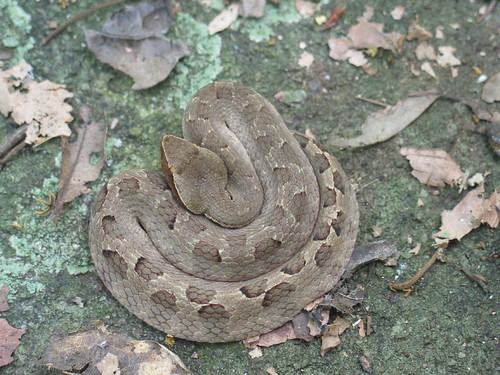
Hump-nosed Viper

We identified the snake quite easily as a Merrem’s Hump Nosed Viper, elegantly known as Hypnale hypnale in Latin and the Kunakatuwa in Sinhala. It was a beautiful specimen of what we at the time thought was a relatively mildly poisonous viper. Of course if Nuwan had been bitten it would have gotten complicated as we were a couple of kilometers out in the jungle down a very steep slope in thorny intermediate jungle. Rather spine tinglingly, I found out many moons later that according to two gentlemen by the name of Kularatne & Ratnatunge (1999) in a poetically titled article ‘Severe systemic effects of Merrem’s hump-nosed viper bite’ that the venom can cause acute renal failure and bleeding disorders.
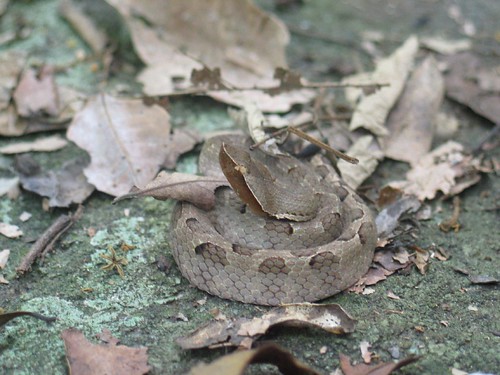
Hump-nosed Viper

Thankfully at the time we were ignorant of these dangers and we simply took some pictures, patted the viper lovingly on the head (I jest!) and made our way back to the research site, being extra mindful of where we kept our feet.

5/25/2010

Waiting for that Perfect Picture

As a word of explanation, I once spent two months living in a little village in Maragalakanda, close to Moneragala back in 2004. My purpose, living there without electricity or running water, was to study bird diversity in an agroforestry scheme for my MSc. This was when the photography bug first bit so there are some tales worth telling and some photos worth showing, though the latter were for the most part taken with a dinky Canon G3. For more of the Moneragala Chronicles click here.

“A perfect picture, where the whole world holds its breath” 

That line from the Match by Romesh Gunasekera has been one of my favourite quotes on photography, despite it being not from a real photographer. For me however it holds the line holds a looking-glass quality of an ideal that can never really be achieved in the real world. There is no perfect picture, all pictures have good and bad and there are too many subjects in the world and stories to be told with photography for there to be a perfect picture. But I still like the quote.

The photography bug most definitely bit me for the first time in Moneragala. While it had been on my radar before and I was intensely interested in it, it was in Moneragala that I first had the access to a reasonably good digital camera and subject matter that really pulled me into photography. As I had to use the camera for my everyday research, I also had the opportunity to use it for extra-curricular activities so to speak. That may not have been the most inspired way of getting into photography but at least it worked.

From my trip there were two photographs that I look back fondly on, mostly because it was the first time I thought coherently and clearly about the most essential components of a photograph, the composition and the exposure together with a healthy dose of patience that was required for both shots.

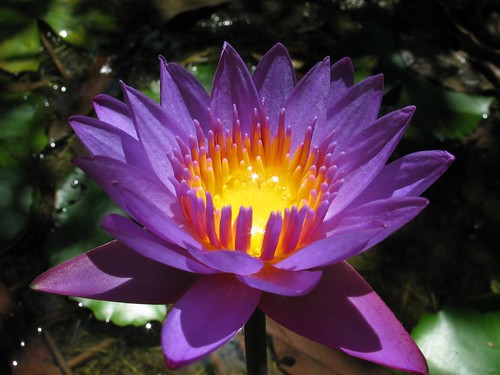
The first picture was probably the easier of the two. It was in a dank, smelly pool of water that I noticed an ethereally beautiful Lotus flower blooming out of the muck. Crawling into the thicket that surrounded the flower, the light just didn’t seem right. I wanted to show the brilliance of the flower contrasted with its dark surroundings. I figured the light coming straight down through the thicket would be the best option. Thus I spent the next couple of hours to the vast amusement of Nuwan, my assistant, crawling in and out of the thicket to get the lighting just right. In the end I lucked out as the flower still had water droplets on it that reflected the play of the direct light down on it which made the image, at least for me, sparkle. Exposing for the flower also meant its surroundings were largely dark, which was perfect for me.

Nil Mahanel

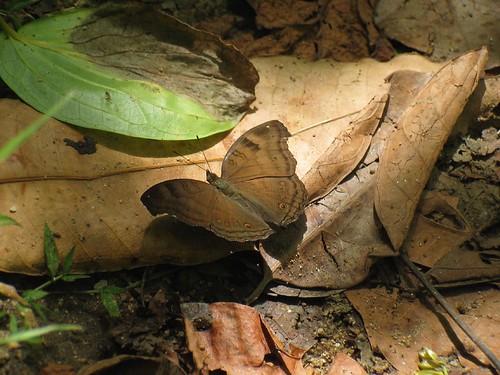
The second picture I am ridiculously fond of is this Chocolate Soldier whom I had to chase (in a very discreet manner) for around 30 minutes to find the exact spot to take a shot with a balanced exposure. Most of the spots it landed in were either too dark or too light, since this was midday in a small patch of forest. Even when it did land in the right location, the careful stalking I had to engage in was not good enough to keep it there until I got the image. Finally everything came together, the butterfly alighted in an area where the light was diffused just enough to give the image a soft light that really brought out the butterfly’s colours and provided definition to the image.

on the forest floor

The bug bit (not the butterfly of course) and these two learning experiences were the first of many where I was acutely conscious of what went into getting an image that worked. Of course I’m still on this learning curve and foresee being on it for some time to come.
 

5/19/2010

The Golden Gecko (Moneragala Chronicles)

As a word of explanation, I once spent two months living in a little village in Maragalakanda, close to Moneragala back in 2004. My purpose, living there without electricity or running water, was to study bird diversity in an agroforestry scheme for my MSc. This was when the photography bug first bit so there are some tales worth telling and some photos worth showing, though the latter were for the most part taken with a dinky Canon G3. For more of the Moneragala Chronicles click here.
  
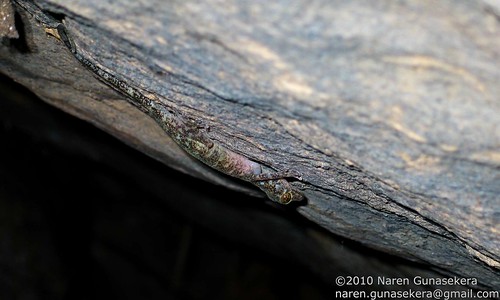
Calodactylodes illingworthorum, not exactly a name that rolls off the tongue is it? Luckily it also goes by the somewhat less tongue-twisting name the Golden Gecko. It was, courtesy of my herpetology crazy assistant, my first introduction to the fascinating array of Sri Lanka's Geckos. Rather astonishingly Sri Lanka enjoys a grand total of 42 species of Geckos of which a staggering 31 are endemic to the country, i.e. found nowhere else in the world except our sunny island. Certainly makes you look twice at the Hunas skittering around you doesn't it? illingworthorum is not only endemic to Sri Lanka but was officially described only in 1953 by that Dion of paleontology and zoology of old Lanka, P.E.P. Deraniyagala.

IMG_2691_adultwtmk
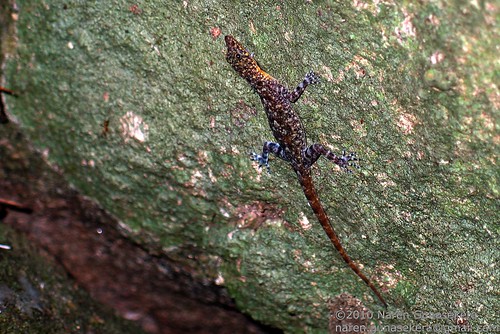
A wary Golden Gecko (Calodactylodes illingworthorum)

Unfortunately the Golden Gecko along with most of Lanka's diverse and endemic reptiles are threatened by habitat destruction by clearing of forest and expansion of agriculture. This is especially a problem for species like illingworthorum which live on discrete boulder outcrops and the destruction of habitat can isolate populations very easily. Continued isolation and destruction of their boulder habitats could lead to that one way alley out of which there is no return, extinction.

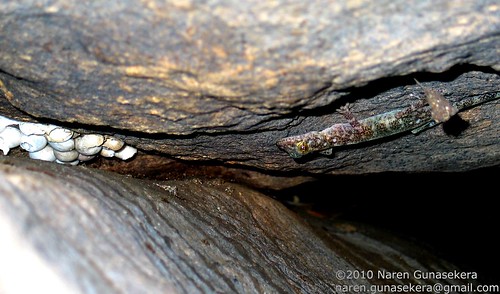
Our first sighting of illingworthorum was at dusk as we washed at the stream close to our quarters. As dusk set and the birds started their night calls amongst the rushing water, a dark shape shot across one of the boulders that scattered the banks of the stream. As a call for action for a couple of interested animal geeks, this was a clarion call. Hastening to get our torches we searched high and low amongst the boulders. Eventually finding a small cave, we bravely (well I might have shivered a bit at the prospect) crouched down into it.

IMG_2688_adultwtmk
Golden Gecko, note the gold coloured neck that gives it its name

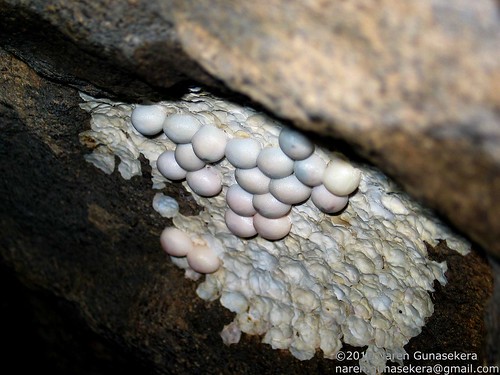
As our eyes focused and adjusted to the now bright light of the torches in an enclosed space, a whitish mass made itself apparent on the wall of the cave. To our delight we had found a nesting spot for illingworthorum. Rather interestingly (well I found it interesting since I'm a science geek), this gecko lays its eggs in the same place over and over again. Thus the eggs that we saw were plastered over the hatched remains of previous nestings. An adult watched us warily, beautifully mottled brown and gray with its distinctive orange throat glowing in our torch light, guarding its eggs. We took a few pictures for posterity and then took its leave, a watchful parent reptile. A rather touching show of affection from a humble Huna in the most unexpected location of a random dank cave.

IMG_2698_eggswtmkIMG_2693_adult and eggswtmk
L-R: Eggs laid over the remains of old eggs; Adult Golden Gecko and egg

3/01/2010

A hard to catch lizard (Moneragala Chronicles)

For more info on what the Moneragala Chronicles are click here.

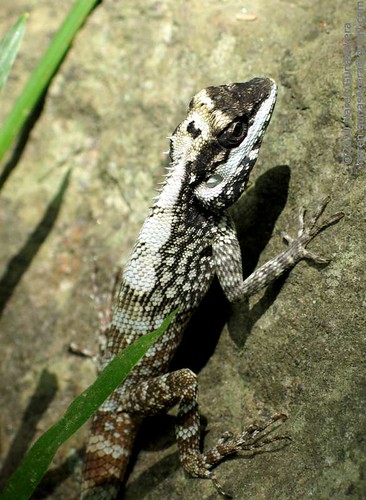
The Katussa fell from the tree in front of me. As we had taken a general interest in the gamut of wildlife present in the Moneragala area, I walked over to take a closer look. I was a bit taken aback to note that the lizard had apparently injured itself when it fell and had a bright red head. I was even more taken aback when the bright red head turned white. Calling Nuwan over to have a closer look, I noted that it was a bit nervous, scattering through the leaves as I came closer.
Calotes ceylonensis
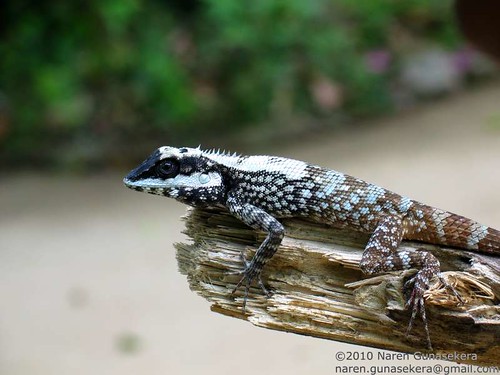
Nuwan quickly identified the katussa as a somewhat rare lizard known as Calotes ceylonensis, which also goes by the much more lyrical common name of the Painted-Lip Lizard. Notably this species is only found in Sri Lanka and is one of the five lizards of the Calotes genus which is endemic to our emerald isle (as a wildlife geek, I rejoice in such facts as this).


We hatched a hasty plan to capture the creature to record its details for posterity. What followed was something like out of a Monty Python skit, Nuwan clambering on a thorny vine as the lizard evaded all attempts at capture. Eventually he climbed around 10 feet up a tree, balanced precariously on a vine and managed to scare the lizard towards me while I affected my best attempt at a rugby tackle (a gentle rugby tackle considering it was a lizard that we were capturing) in order to pin the lizard down. Note that no harm came to Mr. Ceylonensis as we were extremely careful throughout the exercise. In fact more harm came to us than to the lizard.
Calotes ceylonensis


In the end we took a plethora of pictures with the help of the Vedemahattaya's son before releasing the relieved lizard back into the wild. One more member of Sri Lanka's reptile fauna had been recorded and photographed by us. Steve Irwin, here we come.


2/08/2010

Coming Home (Moneragala Chronicles)

As a word of explaination, I once spent two months living in a little village in Maragalakanda, close to Moneragala back in 2004. My purpose, living there without electricity or running water, was to study bird diversity in an agroforestry scheme for my MSc. This was when the photography bug first bit so there are some tales worth telling and some photos worth showing, though the latter were for the most part taken with a dinky Canon G3. The first of the Moneragala Chronicles is a slightly edited version of a post I wrote for a blog I used to maintain a long, long time ago.

Everybody has those rare moments in life where it all comes together, everything is, for a breathless moment, perfect. One of those moments occurred for me in the backwoods of Sri Lanka in Moneragala where I spent two months in a village doing research for my MSc. After a 5am start which due to unfamiliarity of locations turned into an 8am start, my assistant Nuwan and I took a bone-mashing eight hour bus ride in what was a blatantly falsely advertised air-conditioned intercity bus, a trishaw ride over roads that hadn't seen tar since World War II and finally another hours bus ride over more treacherous roads. The sun had just set as we strapped our equipment to our backs and walked 30 minutes through the undergrowth to the house we were staying in for the period of our research.

After a cup of sweet tea by the lantern light to refresh ourselves we then wandered down to the nearby stream to bathe. I hadn’t been to Sri Lanka for over two years and it felt amazing to re-immerse myself in an experience that was so peaceful and timeless after suffering so much to get there. There was still enough light in the sky from the faded sun to silhouette the tops of the mora trees and kitul palms. The water gurgled in a million tones, trickling through the pools and rushing through the bathing pipe, all the while fish were almost painfully nibbling at my feet. Innumerable birds from salelinnias to grey hornbills fluttered and called in the tree-tops searching for their night time roosts adding to the steady chorus of the cicadas.

The final touch to this magic, as we washed the city and town’s dust from our bodies were the fireflies which came out as the last bit of light faded. Sitting on a rock, taking in the little globules of green light drifting in and out of the trees while geckoes skittered through the rocks, I was glad to be home. I finally realized what it was about me that was stuck in our small island, my sense of place. I knew everything would be good.

That is a moment that keeps me going, not only the beauty, the sounds and smells but the feeling of home.